Support Insulator About
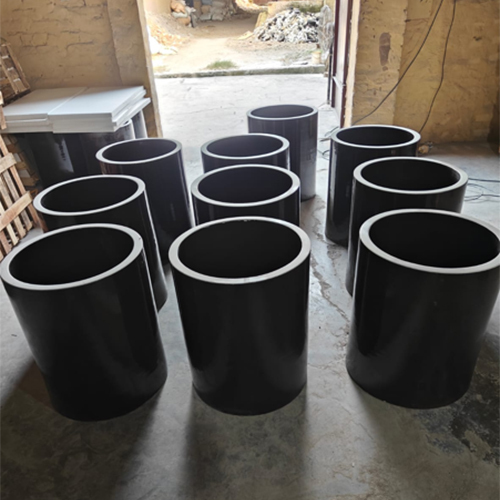
Support insulators are electrical insulating components designed to provide mechanical support and electrical insulation for live conductors, busbars, and other energized equipment in power distribution and electrical systems. They help maintain proper spacing between conductive parts and grounded structures while ensuring safe and reliable operation.
Support insulators are commonly manufactured from high-quality materials such as epoxy resin, porcelain, ceramic, or composite polymers, offering excellent dielectric strength, high mechanical durability, and resistance to heat, moisture, and environmental conditions. They are widely used in switchgear, transformers, control panels, substations, bus duct systems, and other electrical installations.
High Dielectric Strength for Maximum SafetyEngineered for superior electrical performance, these support insulators feature a dielectric strength greater than 18 kV/mm (depending on material), ensuring effective isolation even in demanding voltage environments. This is critical for maintaining system integrity and preventing electrical breakdowns, especially in high-voltage switchgear and panels.
Versatile Application and Mounting SolutionsDesigned for flexibility, the support insulators are suitable for single- or three-phase systems and can be bolt-mounted or installed through pre-drilled holes. Their robust build enables heavy-duty support for busbars, cables, and other electrical equipment, ensuring stability and easy integration in new or retrofit projects.
Durable, Flame-Retardant, and CompliantThese insulators combine a smooth, glazed finish with self-extinguishing properties for maximum fire safety. They also boast high thermal and mechanical endurance, low moisture uptake, and are available in compliance with IS, IEC, or ANSI standards. This ensures reliable, long-term operation while meeting stringent industry requirements.
FAQ's of Support Insulator:
Q: How do support insulators enhance electrical safety in switchgear panels?
A: Support insulators provide robust electrical isolation and mechanical support, reducing the risk of short circuits, flashover, or equipment failure. Their high dielectric strength (over 18 kV/mm) and excellent surface resistance help maintain reliable insulation between live components.
Q: What materials are commonly used for these support insulators and why?
A: Epoxy resin, porcelain, and ceramic are commonly used due to their high dielectric properties, low water absorption rates, thermal stability, and mechanical strength. Epoxy resin insulators, in particular, offer superior flame retardancy and reduced water absorption (<0.5%), making them suitable for harsh environments.
Q: When should I select custom-sized support insulators over standard sizes?
A: Custom-sized insulators are ideal when your installation involves unique panel layouts or non-standard busbar dimensions. Standard sizes fit typical applications, but custom options ensure perfect alignment, mounting, and voltage clearance in specialized or space-constrained environments.
Q: Where are these insulators most effectively used?
A: Support insulators are best deployed in high-voltage switchgear, busbar systems, control panels, and electrical distribution boards. They are designed for both indoor and outdoor installations in industrial settings requiring up to 33 kV insulation and robust load support.
Q: What is the installation process for bolt-mounted support insulators?
A: The installation process involves securing the insulator to a grounded base or metal frame using bolts through provided holes. Ensure correct alignment and torque as per the manufacturer's specifications for optimal mechanical strength and electrical clearance.
Q: How does low water absorption and flame retardancy benefit long-term performance?
A: Low water absorption ensures the insulator maintains high insulating properties even in humid conditions, preventing leakage currents. Flame-retardant, self-extinguishing materials minimize fire hazards and enhance equipment safety during overcurrent or fault conditions.
Q: What compliance standards do these support insulators meet?
A: Support insulators comply with IS, IEC, or ANSI standards, as suited to the regional requirements. This guarantees performance, safety, and quality in electrical applications across India and global markets.
 Send Inquiry


 Send Inquiry

 Send Inquiry