Rotary Air Lock Valve with Chain Spocket Drive About
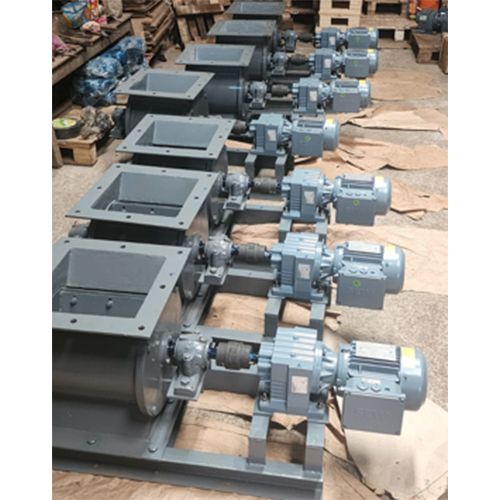
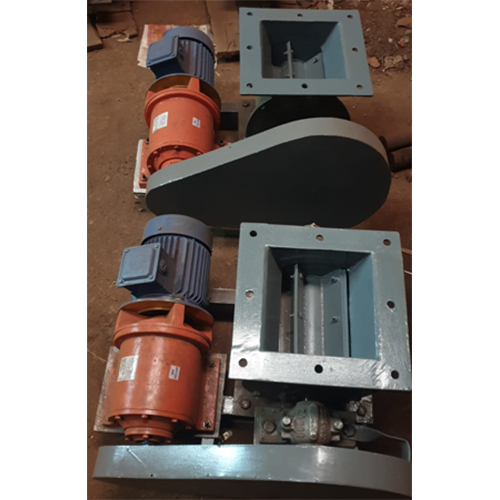
A rotary airlock valve with a chain sprocket drive is a heavy-duty bulk material handling device used to discharge powders and granules while maintaining an airtight pressure seal. The chain and sprocket system connects the rotor shaft to an external motor, providing high-torque operation
Precision and Sealing EfficiencyThe rotary air lock valve incorporates 6 to 8 precision-machined rotor blades to provide superior sealing efficiency. This prevents material leakage and ensures a consistent, controlled material flow, improving operational effectiveness in pneumatic conveying and dust collection systems.
Robust Drive and Adaptable ConfigurationEquipped with a chain and sprocket drive system with a gear reducer, the valve offers adjustable RPM (10-30), allowing customization according to process demands. Flanged or foot mounting, and the choice of square or round inlets/outlets, make it highly adaptable to diverse installation requirements.
Durability and Low MaintenanceConstructed with corrosion-resistant coatings and rugged materials, the valve ensures a long service life in challenging environments. The simple, robust design minimizes maintenance needs, making it a cost-effective solution for continuous industrial use.
FAQ's of Rotary Air Lock Valve with Chain Spocket Drive:
Q: How does the rotary air lock valve with chain sprocket drive function in conveying systems?
A: The valve uses its rotating precision-machined blades to regulate and control the flow of powder, dust, or granules between chambers with different pressure levels, efficiently isolating the conveying system while ensuring continuous material discharge.
Q: What type of maintenance is required for this rotary valve, and how often should it be performed?
A: The valve's rugged design requires minimal maintenance. Routine checks for seal integrity, chain tension, lubrication, and motor operation are recommended every few months to ensure optimal performance and a long service life.
Q: When should I choose PTFE seals versus Buna-N seals in my application?
A: PTFE seals are ideal for high-temperature or chemically aggressive environments, while Buna-N seals are suitable for general-purpose applications involving oily or dusty media. The selection depends on process media and temperature conditions.
Q: Where can this valve be installed within industrial processes?
A: It is suitable for installation at hopper discharges, dust collectors, pneumatic conveying pipelines, and similar points in cement, chemical, or food processing plants, where controlled and dust-tight material transfer is essential.
Q: What benefits does the adjustable RPM feature provide?
A: Adjustable RPM (10-30) allows the flow rate to be tailored to the material characteristics and process requirements, improving efficiency, reducing material waste, and optimizing the downstream process.
Q: How do I select the appropriate size and material for my application?
A: Selection depends on throughput requirements, inlet/outlet dimensions (from 150 mm to 500 mm or custom), and material compatibility. Options in cast iron, mild steel, or stainless steel ensure compatibility with different product types and ambient conditions.
 Send Inquiry



 Send Inquiry

 Send Inquiry